
Why haze deserves attention
The worsening haze in Singapore is a source of worry for many mothers-to-be. PM2.5 particles are small enough to reach deep into the lungs, where they can trigger inflammation and oxidative stress in the body.1
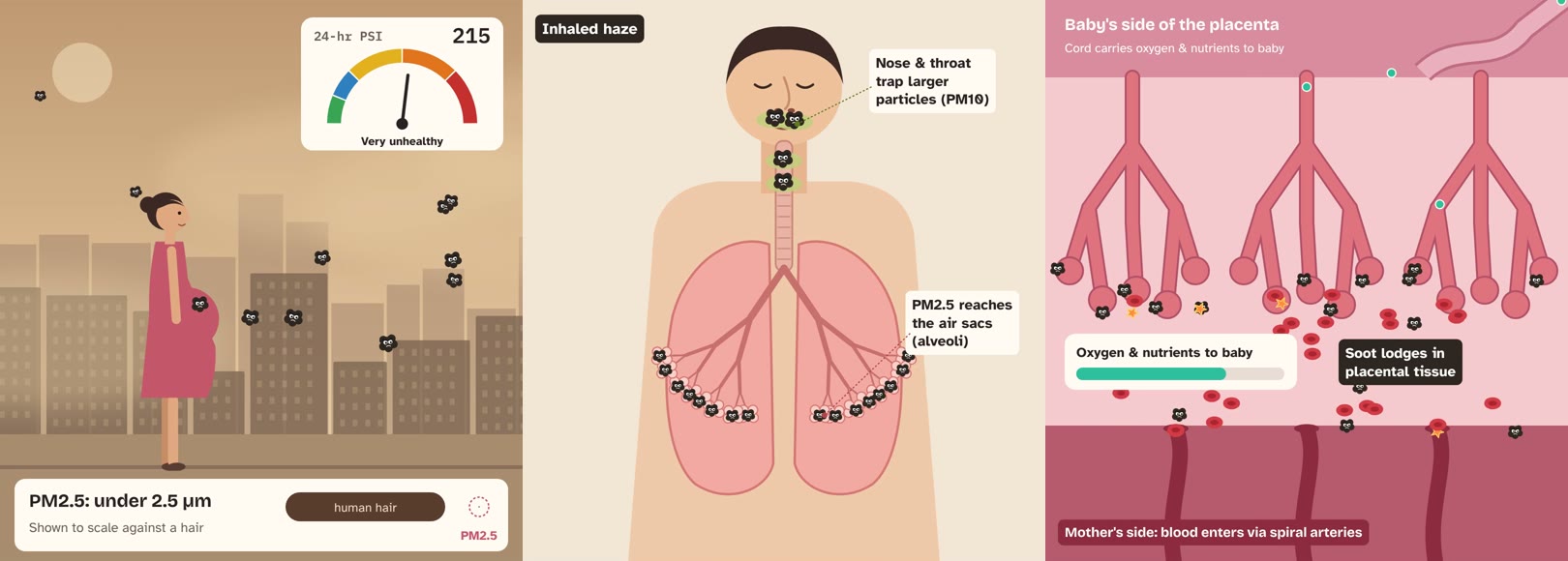
Research has also found tiny soot (black carbon) particles from everyday air pollution in the placenta, in umbilical cord blood and in fetal tissue early in pregnancy, with higher levels in mothers who were more exposed.2 These were small studies of urban pollution in Europe rather than haze, and what the particles mean for a baby’s health is not yet known.
The current evidence
The latest research links higher pollution exposure in pregnancy with increased population-level risks of:1,3,4
- preterm birth
- low birth weight
- impaired fetal growth
- hypertensive disorders of pregnancy.
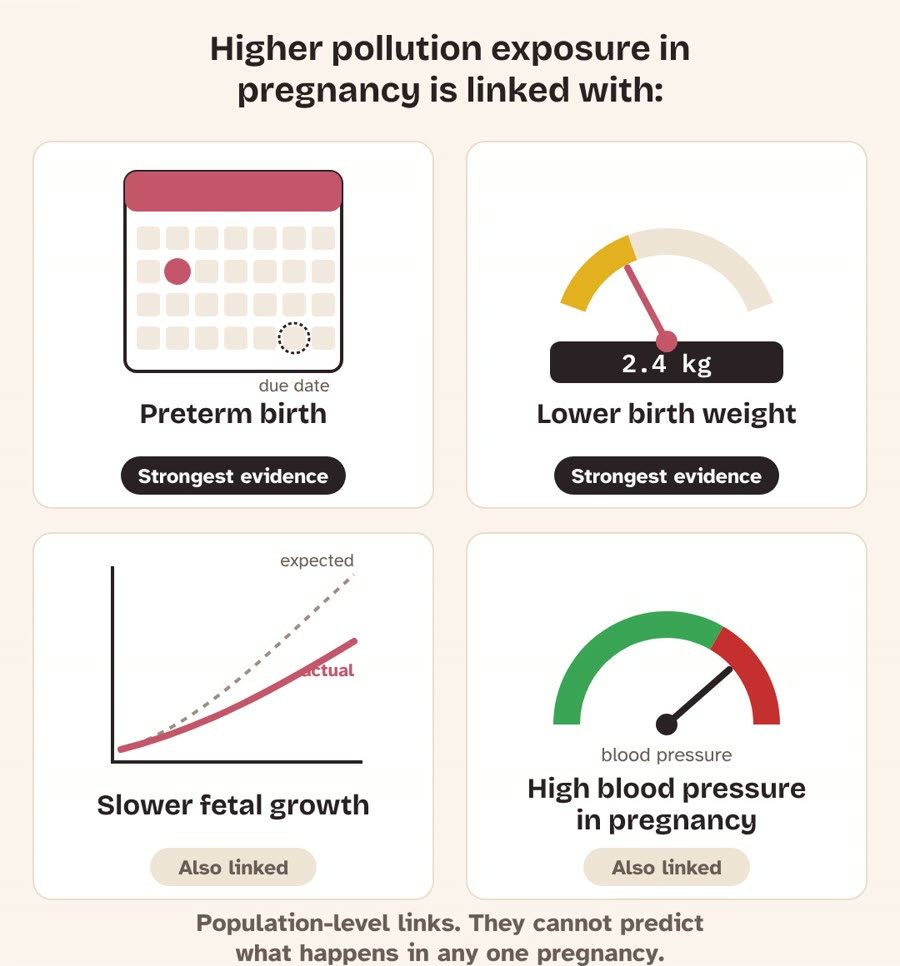
The evidence is strongest for preterm birth and low birth weight.3,4 For preterm birth, some studies point to the late second trimester (around weeks 17 to 28) as a more sensitive period, although findings vary between studies.4 Evidence for other outcomes, including pre-eclampsia, miscarriage and effects on childhood development, is growing but less definitive.1,4 These findings describe risks across large populations; they cannot predict the outcome of any one pregnancy.
How much exposure is too much?
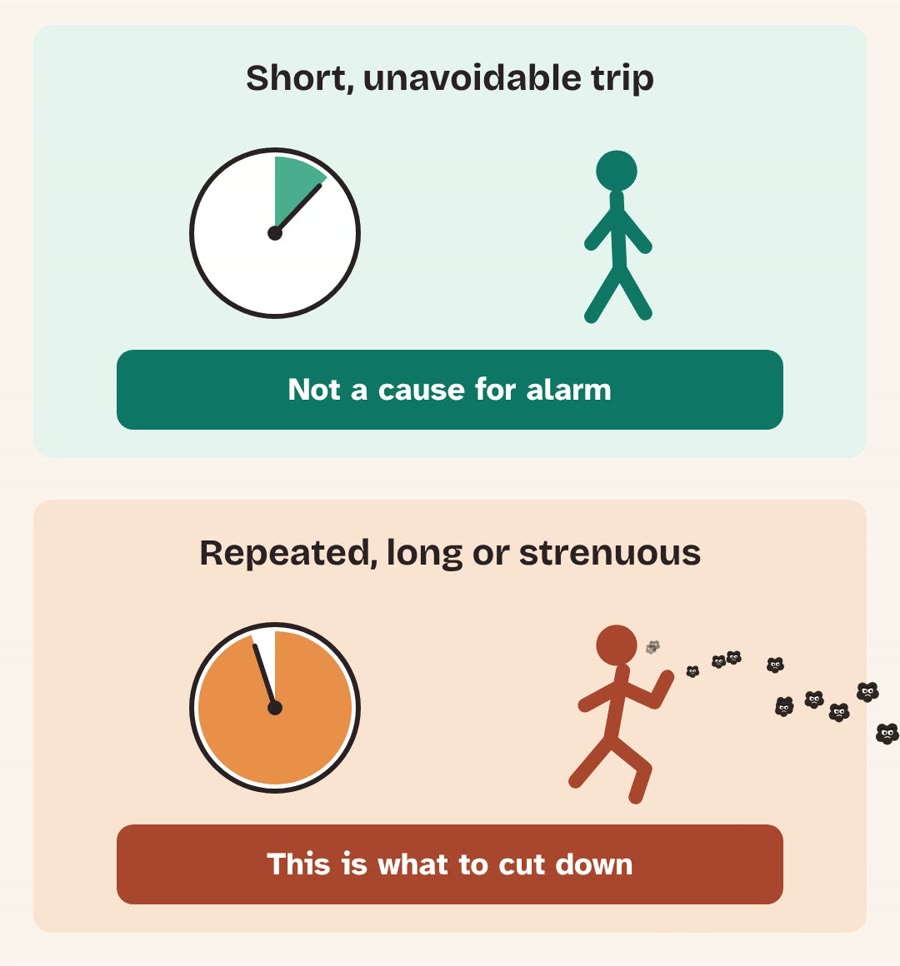
A short, unavoidable exposure should not be a cause for alarm. The priority is avoiding repeated, prolonged or strenuous activity outdoors when air quality is poor.5 The health authorities classify pregnant women as a group more vulnerable to haze, and advise reducing outdoor activity as air quality worsens.5,6
How do I protect myself and my baby from the effects of the haze?
The take-home message is simple: reduce the amount of polluted air you breathe, especially the fine particles called PM2.5. The best protection is clean indoor air.
Spend more time in cleaner indoor air when the haze is significant.3,7
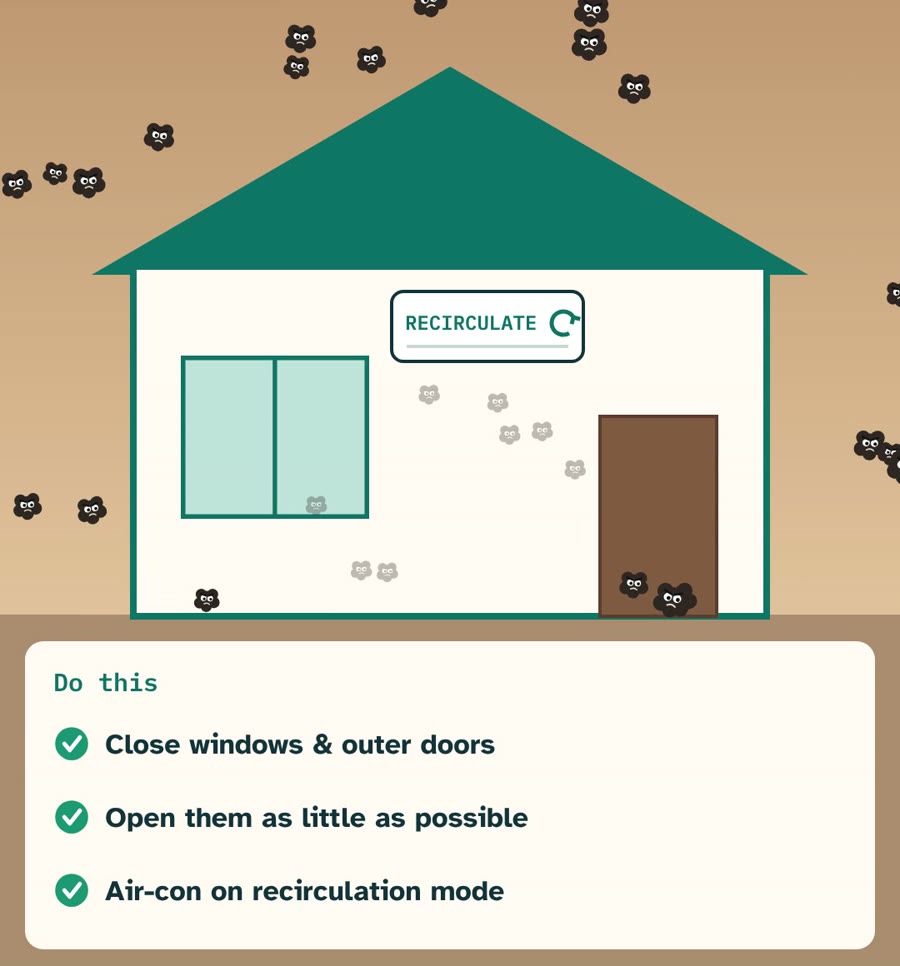
- Keep windows and exterior doors closed, and open them as little as possible.
- Use air-conditioning on recirculation mode, where this is available and suitable.

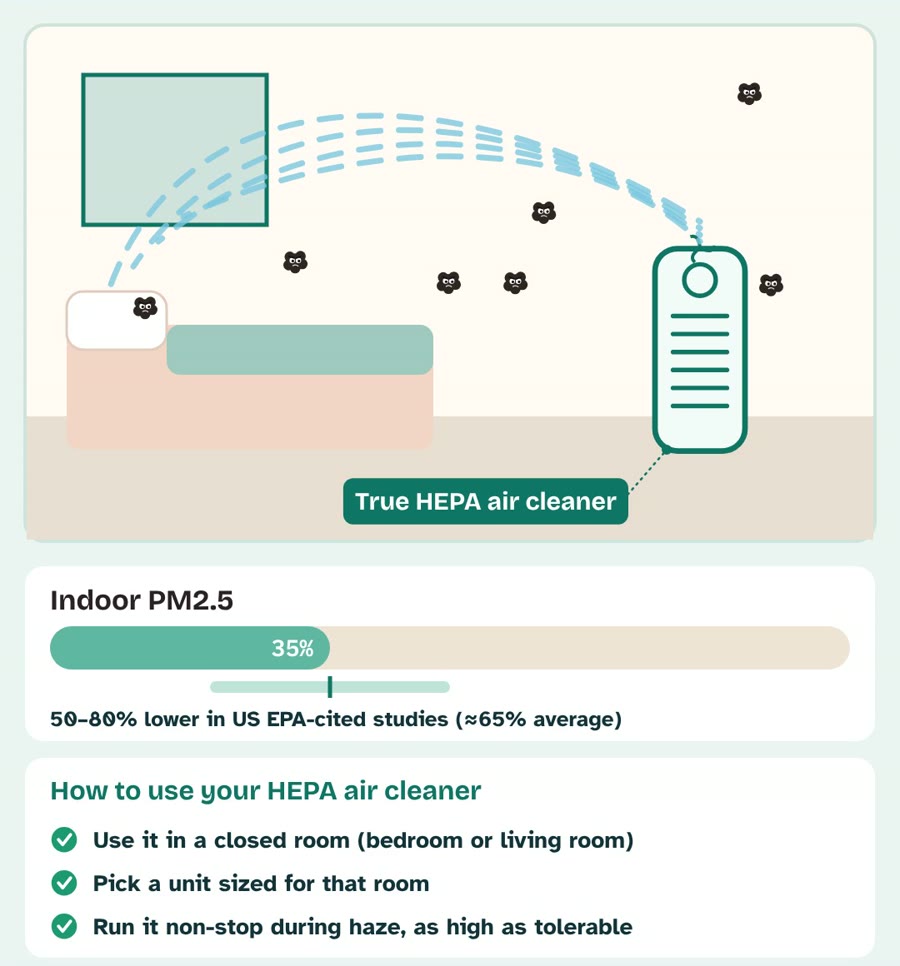
Use a portable air cleaner with a true HEPA filter. This is the best-supported household measure. In studies cited by the US EPA, portable air cleaners reduced indoor PM2.5 by about 50% to 80%, averaging around 65%.3 Actual results depend on filter quality, room size, fan speed, outdoor pollution levels and how well the room is sealed.
- Use it in a relatively enclosed room (often the bedroom or living room).8
- Choose a unit sized for that room.8
- Run it continuously during haze, at the highest fan speed you can tolerate.8
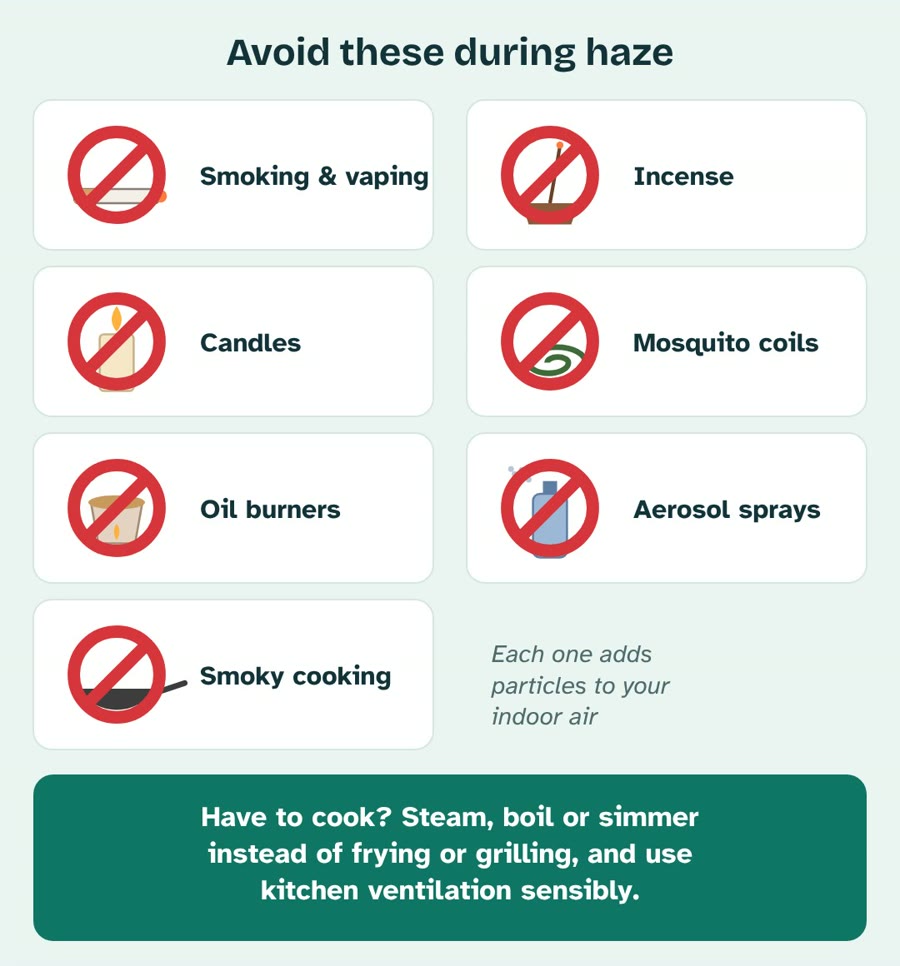
Avoid adding smoke indoors. During haze, do not add to the particle burden in your home.3,8 Avoid:
- smoking and vaping
- incense
- candles
- mosquito coils
- oil burners
- aerosol sprays
- smoky cooking. If you need to cook, choose lower-smoke methods such as steaming, boiling or simmering, and use kitchen ventilation sensibly.8
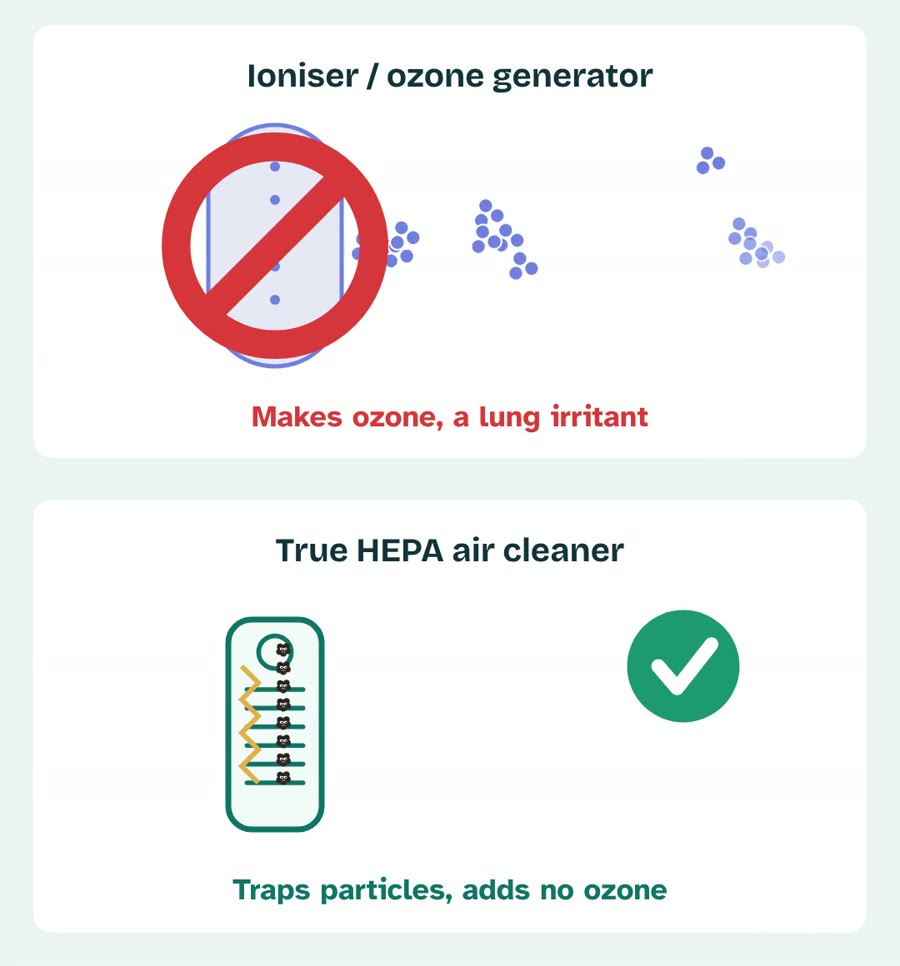
Avoid air cleaners that intentionally produce ozone. Ozone is itself a lung irritant. Choose a HEPA-type unit rather than an ioniser or "ozone generator" marketed as an air purifier.8,9
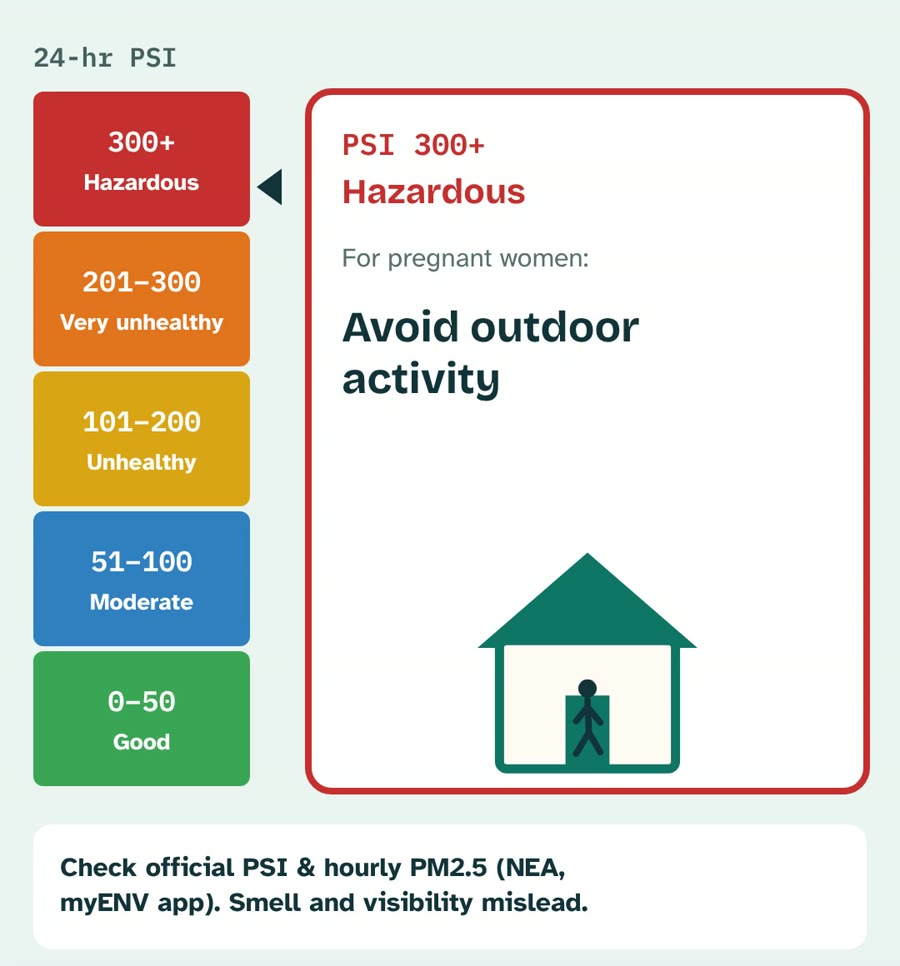
Follow the health authorities’ advice on outdoor activity. They use two readings:5,6
- The 24-hour PSI forecast, for planning the next day. For pregnant women: at PSI 101–200, minimise prolonged or strenuous outdoor exertion; at PSI 201–300, minimise outdoor activity; above PSI 300, avoid outdoor activity.
- The 1-hour PM2.5 reading, for deciding what to do right now: at 56–150 µg/m³, avoid strenuous outdoor activity for the next hour; at 151 µg/m³ and above, avoid all outdoor activity for the next hour.
If you must go out when the hourly PM2.5 is 151 µg/m³ or above, keep the trip as short as possible. A well-fitting N95 or equivalent mask reduces exposure, but women in the 2nd and 3rd trimester should not wear one for long periods. Limit your time outdoors instead, and remove the mask if it feels uncomfortable.5 N95 masks are generally not needed while commuting or indoors.5
What masks are helpful?
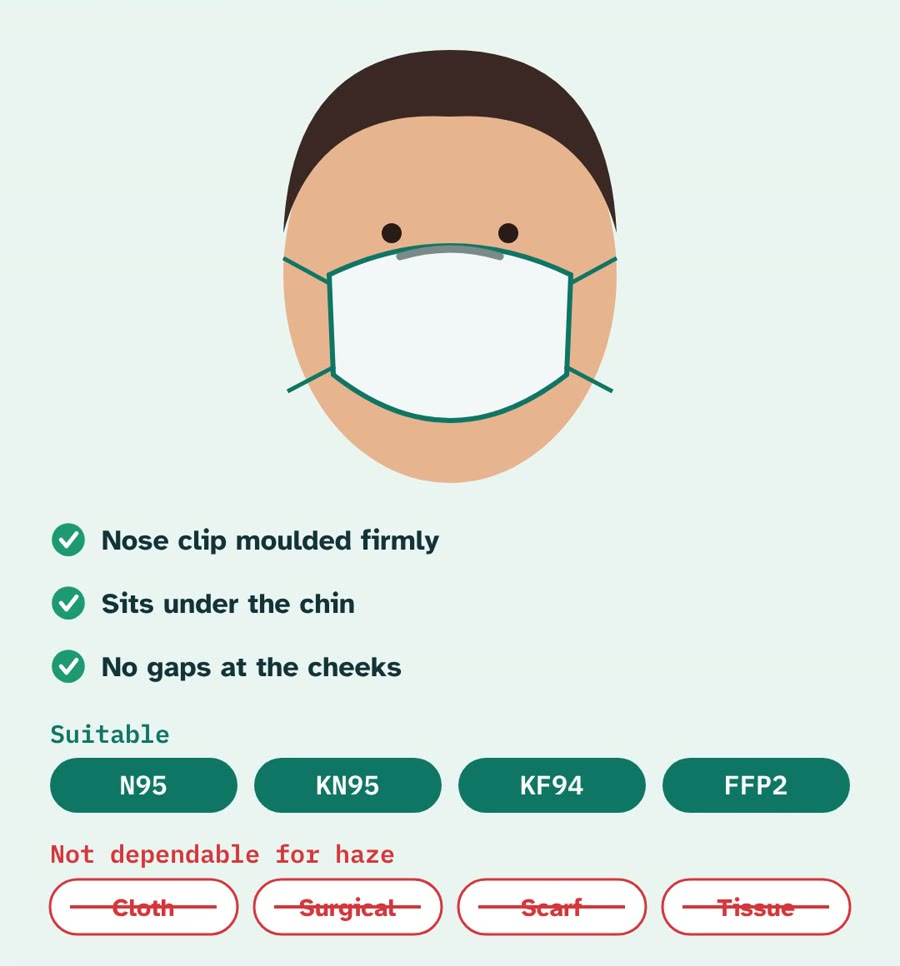
If you cannot avoid being outdoors when the hourly PM2.5 is high, wear a well-fitting particulate respirator: an N95, or an equivalent such as a KN95, KF94 or FFP2.5,10 These are designed to filter fine particles when they seal properly around the face.
How to use the mask
A high-filtration mask works only if it fits. It should sit tightly over the nose and beneath the chin, with the nose clip moulded firmly and no gaps at the sides.10,11
Do not rely on cloth masks, paper or surgical (ear-loop) masks, scarves or tissues for haze protection. They do not seal or filter fine smoke particles dependably.10,11
Mask limitations
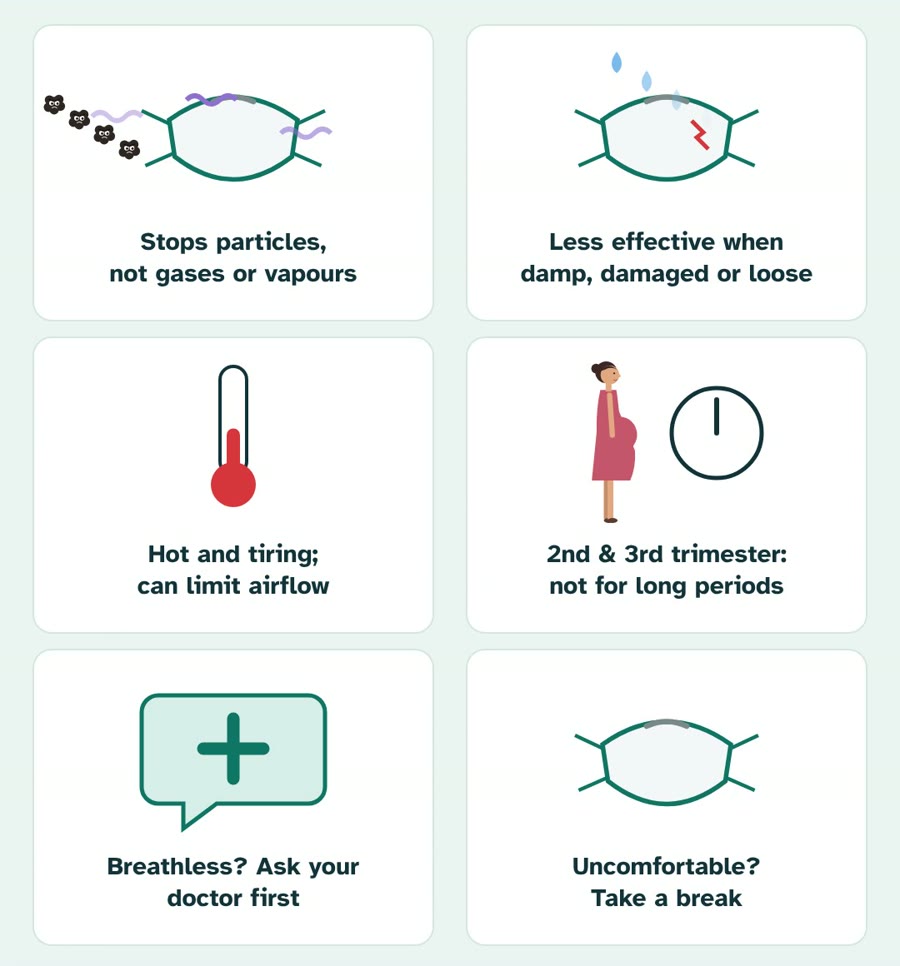
- N95-type respirators reduce exposure to particles but do not protect against gases and chemical vapours in haze.12
- They become less effective if damp, damaged or loosely fitted.
- They can limit airflow and feel uncomfortable, especially in the heat or during exertion.
Pregnant women who are breathless at rest or during usual activity, and anyone with severe heart or lung disease, should speak with their doctor before using an N95-type respirator. Stop and take a break if the mask causes significant discomfort.5
Outdoor activity during haze
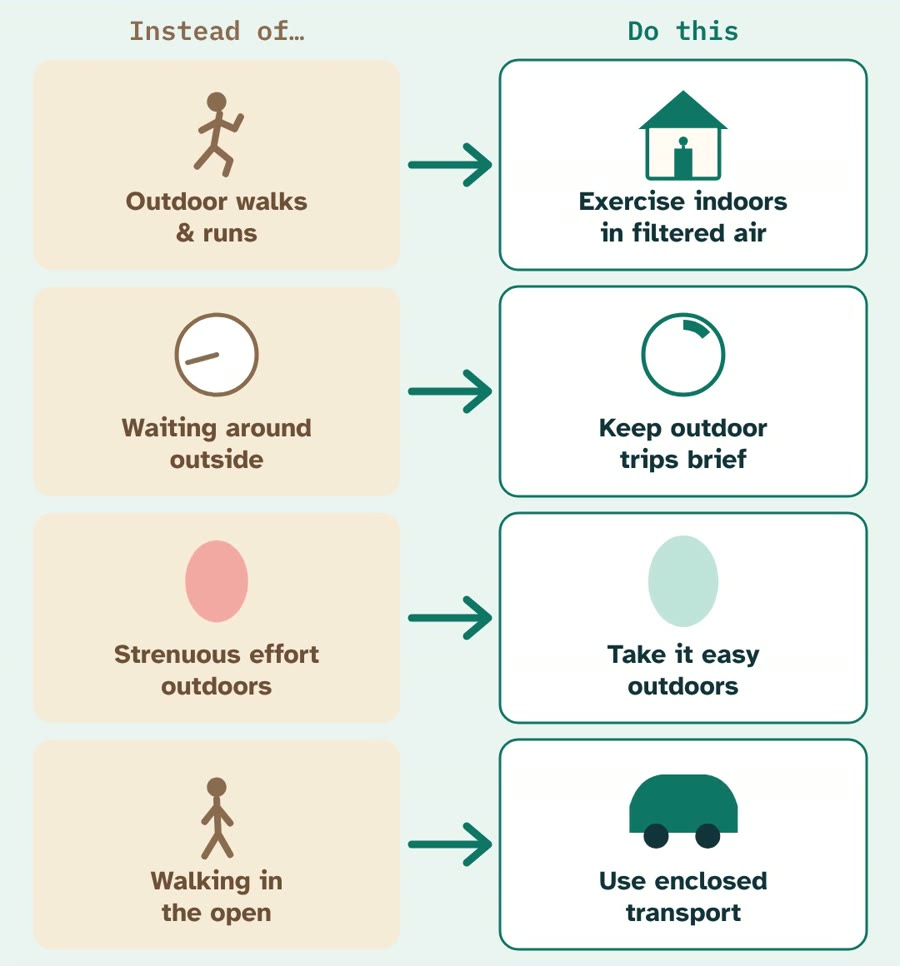
Check official PSI forecasts and hourly PM2.5 readings, rather than judging air quality by smell or visibility.6 Use the PSI forecast to plan the next day, and the hourly PM2.5 reading to decide what to do right now. When outdoor air quality is poor:3,5,6
- Postpone walks, runs and outdoor exercise; exercise indoors in filtered air instead.
- Keep outdoor trips brief and avoid waiting outside unnecessarily.
- Avoid strenuous exertion outdoors, because faster breathing increases the amount of pollution inhaled.
- Use enclosed transport where practical.
When to seek help
Speak to your antenatal care team if you have:
- a persistent cough
- wheeze
- chest tightness
- worsening asthma
- unusual breathlessness.
Seek urgent medical help for:
- severe breathing difficulty
- chest pain
- fainting
- a serious asthma attack.
Also seek a prompt obstetric assessment for:
- reduced fetal movements
- vaginal bleeding
- suspected leakage of fluid
- regular, painful contractions
- severe headache
- visual disturbances
- other symptoms your maternity team has asked you to report.
For pregnancy-specific warning signs, follow the advice of your own obstetrician.
Take-home message
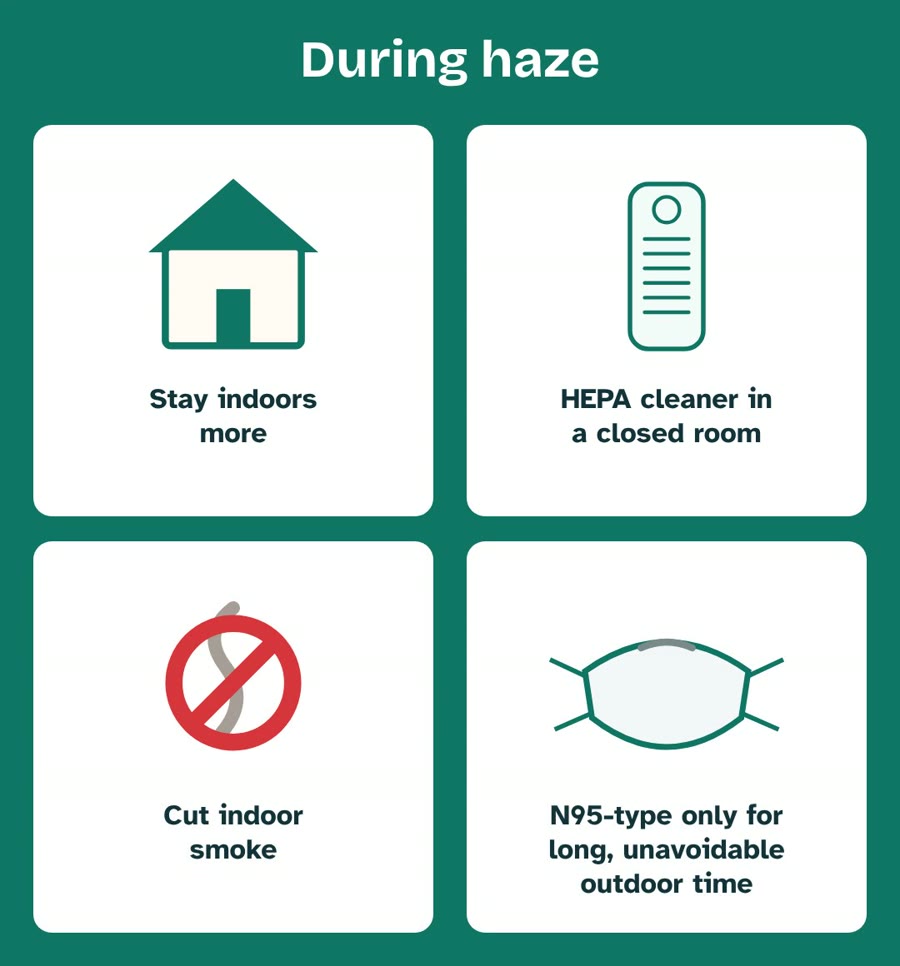
During haze, the most effective plan is to:
- stay indoors more
- use a properly sized HEPA air cleaner in a closed room
- reduce indoor smoke sources
- keep trips outdoors short when the hourly PM2.5 is high, and reserve a well-fitting N95-type respirator for time outdoors that you cannot avoid.
This approach follows current US EPA smoke guidance and Singapore’s haze health advice.3,5,6
References
Web pages accessed 20 October 2026.
- Aguilera J, Konvinse K, Lee A, et al. Air pollution and pregnancy. Semin Perinatol. 2023;47(8):151838. doi:10.1016/j.semperi.2023.151838. https://doi.org/10.1016/j.semperi.2023.151838
- Bongaerts E, Lecante LL, Bové H, et al. Maternal exposure to ambient black carbon particles and their presence in maternal and fetal circulation and organs: an analysis of two independent population-based observational studies. Lancet Planet Health. 2022;6(10):e804–e811. doi:10.1016/S2542-5196(22)00200-5. https://doi.org/10.1016/S2542-5196(22)00200-5
- US Environmental Protection Agency. Wildfire Smoke Guide for Public Health Officials (EPA-452/B-26-001). June 2026. Sections 2.3, 2.5B, 3.1–3.5. https://www.epa.gov/system/files/documents/2026-06/wildfire-guide-for-public-health-officials-2026.pdf
- Boitel A, Cot S, Pujol S, et al. Air pollution and adverse birth outcomes: a systematic review of fine critical windows. Environ Res. 2026;299:124294. doi:10.1016/j.envres.2026.124294. https://doi.org/10.1016/j.envres.2026.124294
- Ministry of Health, Singapore. Haze [health advisories for the public, including vulnerable groups and N95 mask use]. Updated 19 October 2026. https://www.moh.gov.sg/others/haze/
- National Environment Agency, Singapore. How to Plan Your Outdoor Activities During Haze [advisory]. July 2024. https://isomer-user-content.by.gov.sg/46/4cac521a-0f04-439c-aae9-2c05044164a1/NEA%20Advisory_How%20to%20Plan%20Your%20Outdoor%20Activities%20During%20Haze_English%20version_July%202024.pdf
- US Environmental Protection Agency. Create a Clean Room During a Wildfire [infographic]. https://www.epa.gov/node/290328
- US Environmental Protection Agency. Create a Clean Room to Protect Indoor Air Quality During a Wildfire. https://www.epa.gov/emergencies-iaq/create-clean-room-protect-indoor-air-quality-during-wildfire
- US Environmental Protection Agency. Ozone Generators that are Sold as Air Cleaners. https://www.epa.gov/indoor-air-quality-iaq/ozone-generators-are-sold-air-cleaners
- US Environmental Protection Agency. Wildfire smoke fact sheet: protecting your lungs (EPA-452/F-26-004). 2026. https://www.epa.gov/system/files/documents/2026-06/protect-your-lungs-factsheet.pdf
- AirNow (US EPA). The Right Respirator and Proper Fit [fact sheet]. https://www.airnow.gov/sites/default/files/2020-02/the-right-respirator-and%20proper-fit-508.pdf
- American Lung Association. How to Wear a Mask. https://www.lung.org/lung-health-diseases/wellness/masks


